How much does construction estimating outsourcing cost in Australia?
The cost of construction estimating outsourcing in Australia depends on factors such as project size, complexity, drawings, scope, turnaround time and the level of estimating support required. A simple takeoff may require less work than a detailed estimate for a complex commercial project. Instead of focusing only on the price of an estimating service, contractors should consider accuracy, time saved, tender deadlines and the potential cost of missed or incorrectly measured items.
For Australian builders, subcontractors, electrical contractors and construction companies, outsourcing estimating can provide flexible access to estimating support without requiring every project to be handled internally.
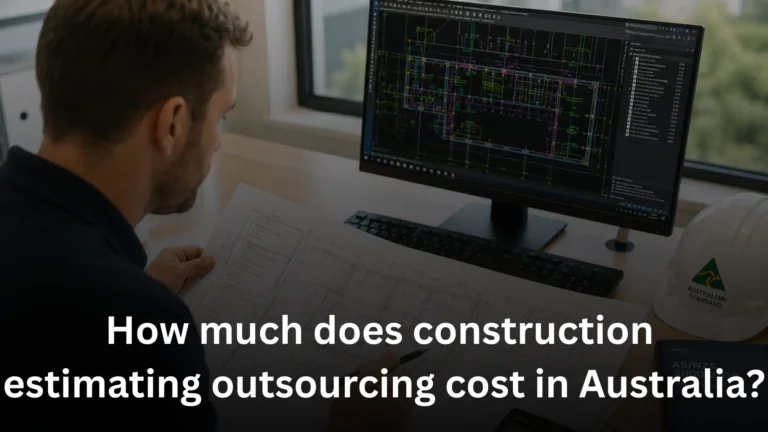
What is construction estimating outsourcing?
Construction estimating outsourcing means engaging an external estimating professional or specialist service to prepare quantity takeoffs, cost estimates, tender documentation and related estimating work on behalf of a contractor or construction business.
The scope can vary considerably. Depending on the project, outsourced estimating may include:
- Reviewing architectural, structural and service drawings
- Quantity takeoffs and material measurements
- Labour and material pricing
- Preparing trade-specific estimates
- Tender pricing support
- Reviewing inclusions, exclusions and project scope
- Identifying missing or unclear information
- Preparing estimating reports or schedules
- Supporting revisions and tender updates
For businesses experiencing tender volume fluctuations, outsourcing can be a practical way to increase estimating capacity without committing to a permanent in-house resource for every workload level.
What affects outsourced construction estimating cost?
There is no single price that applies to every Australian construction estimating project. The final cost generally reflects the amount of work required and the complexity of the information that needs to be reviewed.
1. Project size and scope
A small residential or straightforward trade project may require considerably less estimating work than a large commercial development with multiple drawings, trades and specifications.
More quantities, trades and documentation generally mean more time is required to complete the estimate.
2. Drawing and documentation quality
Clear, coordinated drawings can make the estimating process more efficient. In contrast, incomplete drawings, revisions, conflicting information or poorly organised documentation can increase the time required to review the project.
3. Project complexity
Complex commercial, industrial and infrastructure-related projects can involve multiple systems, detailed specifications and numerous construction elements.
The more complicated the scope, the more detailed the estimating process may need to be.
4. Type of estimate required
A contractor may need a basic quantity takeoff, a detailed trade estimate or broader tender support. These services require different levels of involvement.
For example, a quantity takeoff focuses primarily on measuring and quantifying materials, while a detailed estimate may involve additional pricing, labour considerations, scope review and tender documentation.
5. Turnaround requirements
Tender deadlines can sometimes create urgent estimating requirements. A short turnaround may require additional estimating resources or prioritisation, depending on the project and workload.
Contractors should communicate the tender closing date and required delivery date at the beginning of the engagement.
6. Revisions and project changes
Construction drawings and specifications can change during the tender process. Significant revisions may require quantities and pricing to be reviewed again.
When comparing estimating service cost in Australia, contractors should therefore clarify how revisions and additional scope will be handled.
Fixed pricing vs hourly or ongoing estimating support
Estimating providers may structure their services differently. Depending on the project, an arrangement may be based around a specific project, scope of work or ongoing estimating support.
Approach | Best suited to | Key consideration |
Project-based estimating | Individual tenders or defined projects | Cost relates to the specific scope |
Hourly estimating support | Variable or changing requirements | Useful when the workload is difficult to define |
Ongoing support | Contractors with regular tender activity | Provides more consistent estimating capacity |
Trade-specific estimating | Specialist subcontractors | Focuses on a particular trade or scope |
The right approach depends on tender volume, internal capacity, project complexity and how predictable the contractor’s workload is.
Before engaging a provider, ask what is included, how revisions are handled, what information is required and when the completed estimate will be delivered.
Is outsourcing estimating cheaper than hiring in-house?
Not necessarily in every individual project, but outsourcing can provide a more flexible cost structure.
An in-house estimator represents an ongoing business resource, while outsourced estimating allows contractors to obtain additional support when tender workloads increase or internal resources are unavailable.
The comparison should therefore go beyond the estimating fee.
Consider:
- Time spent by internal staff preparing takeoffs
- Recruitment and employment costs
- Software and estimating resources
- Training and management time
- Tender deadlines
- Number of projects being priced simultaneously
- Cost of delaying or missing tender opportunities
- Internal team’s ability to focus on construction and project management
For contractors with fluctuating workloads, outsource estimating services can provide additional capacity when it is needed without requiring a permanent increase in internal staffing.
When should Australian contractors outsource estimating?
Outsourcing can be particularly useful when:
- Tender volume increases unexpectedly.
- Internal estimators are already at capacity.
- A tender requires specialist estimating knowledge.
- Several projects need to be priced simultaneously.
- A deadline leaves insufficient time for an internal team.
- A contractor wants additional estimating capacity without expanding permanent staff.
- The business needs support with detailed quantity takeoffs or tender preparation.
The key question is not simply, “How much does outsourcing cost?” It is, “What does it cost the business not to have enough estimating capacity?”
If your team is regularly spending valuable hours on takeoffs instead of tender strategy, project planning or client work, professional estimating support may be worth considering.
For electrical contractors, specialist support can be particularly useful where projects involve detailed electrical drawings, equipment schedules and multiple installation requirements. Explore professional electrical estimating services when your project requires dedicated electrical estimating support.
A practical outsourcing checklist
Before requesting a quote, prepare:
- Project drawings and plans
- Specifications and schedules
- Scope of work
- Trade requirements
- Tender closing date
- Required delivery date
- Existing pricing information, where applicable
- Details of known inclusions and exclusions
- Revision information
- Preferred estimate format
Providing complete information at the beginning can help the estimating provider understand the project accurately and determine the required level of work.
How to get an accurate estimating service cost in Australia
The most reliable way to determine construction estimating outsourcing cost is to provide the project documentation and request a scope-specific quotation.
A useful enquiry should explain what needs to be estimated, the project type, the documentation available and the required deadline.
Ask the estimating provider:
- What exactly is included?
- Is the service a takeoff, estimate or both?
- How are revisions handled?
- What is the expected turnaround?
- What format will the final estimate use?
- What information does the estimator need?
- Are there any exclusions or assumptions?
Contractors considering outsourcing should also evaluate the provider’s communication process and ability to work with their tender workflow. For additional guidance, see this resource on choosing the right partner for outsourcing construction estimating in Australia.
Does outsourcing construction estimating save money?
Outsourcing can save money when it reduces internal workload, improves estimating capacity or helps a contractor respond to more tender opportunities efficiently.
However, outsourcing should not be viewed simply as a way to obtain the lowest possible estimating fee. The objective is to obtain reliable estimating support that fits the project’s requirements and helps the business make informed tender decisions.
An accurate scope, clear communication and appropriate estimating process are often more important than choosing a provider based solely on price.
If you have an upcoming tender and want to understand what professional estimating support could involve, discuss your estimating requirements with Estimating Solutions Group.
Frequently Asked Questions
How much does construction estimating outsourcing cost in Australia?
There is no universal price. Cost depends on project size, complexity, documentation, estimating scope, turnaround time and the level of revisions or support required. A project-specific quotation is the best way to establish the expected cost.
What affects the cost of outsourced construction estimating?
The main factors include project size, drawing quality, complexity, number of trades, type of estimate, turnaround requirements and the amount of revision work required.
Is outsourcing estimating cheaper than hiring an estimator?
It can be more flexible for businesses with fluctuating workloads because contractors can access estimating capacity when required. However, the most suitable option depends on tender volume, internal resources and long-term business requirements.
What is included in construction estimating services Australia?
Depending on the agreed scope, services can include drawing review, quantity takeoffs, material measurements, labour and material pricing, tender support, scope review and estimate preparation.
When should I outsource estimating services?
Consider outsourcing when your internal team is overloaded, several tenders are due at once, specialist estimating support is required or you need additional capacity without immediately expanding your permanent team.
How can I get an accurate estimating service cost?
Provide the estimator with relevant drawings, specifications, scope details, tender deadlines and the required deliverables. A clear project brief allows the provider to assess the workload and quote appropriately.
Does outsourcing estimating improve tender efficiency?
It can help contractors increase estimating capacity, reduce internal workload and manage multiple tender requirements. The benefit depends on the quality of the documentation, communication and estimating process.
Make your next tender easier to manage
Understanding construction estimating outsourcing cost is only the first step. The more important consideration is whether the estimating approach gives your business the capacity, detail and turnaround required for its tender workload.
Whether you are pricing a single project or need ongoing estimating support, a project-specific discussion can help establish the appropriate scope and approach.
If you have drawings ready for review, contact Estimating Solutions Group to discuss your project or tender requirements.