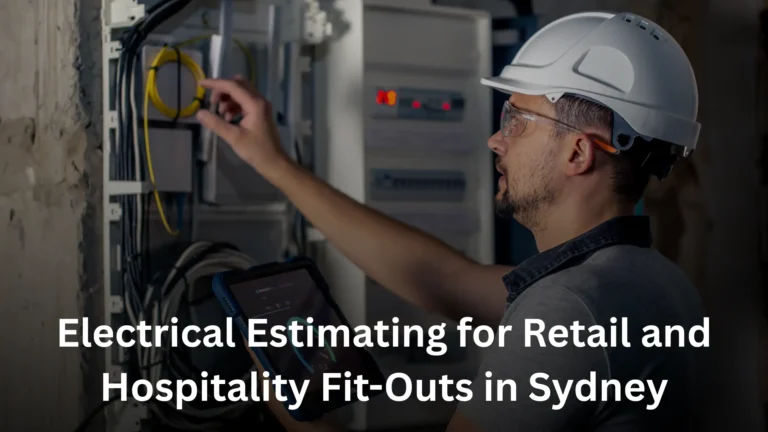
Electrical Estimating for Retail and Hospitality Fit-Outs in Sydney
Sydney’s retail and hospitality sector continues to evolve, with new restaurants, cafés, bars, hotels, retail stores, and entertainment venues opening across the CBD, Inner West, Parramatta, Chatswood, Macquarie Park, and other growth areas.
For electrical contractors, retail and hospitality fit-out projects can be highly profitable. However, they also present unique estimating challenges. Tight construction programmes, landlord approval requirements, complex lighting designs, shopping centre regulations, and extensive coordination with multiple trades mean these projects require a specialised approach to electrical estimating.
Accurate electrical tender pricing is essential. Underestimate labour, materials, or site constraints, and profitability quickly disappears. Overestimate costs, and you risk losing the project to a competitor.
This guide explains what’s involved in retail and hospitality fit-out electrical estimating in Sydney, common estimating mistakes to avoid, and how contractors can improve accuracy when pricing these projects.
What Is Retail and Hospitality Fit-Out Electrical Estimating?
Retail and hospitality fit-out electrical estimating is the process of calculating the labour, materials, equipment, compliance requirements, and project-specific costs associated with electrical installations in shops, restaurants, cafés, bars, hotels, and other customer-facing commercial spaces.
In Sydney, electrical estimators must also account for local labour rates, shopping centre requirements, site access restrictions, landlord approval processes, utility provider regulations, and the unique challenges of working within existing buildings.
Key Challenges in Sydney Fit-Out Estimating
Challenge | Why It Matters |
Complex Lighting Systems | High material and installation costs |
Fast Construction Programmes | Increased labour pressure and coordination requirements |
Existing Building Constraints | Potential upgrades and remediation works |
Shopping Centre Requirements | Additional compliance and approval processes |
Site Access Restrictions | Reduced productivity and increased labour costs |
Multiple Trade Coordination | More project management and supervision time |
Landlord Requirements | Additional documentation and design reviews |
Utility Authority Requirements | Potential delays and connection costs |
What Makes Retail and Hospitality Fit-Out Estimating Different?
Retail and hospitality projects differ significantly from commercial office fit-outs and industrial electrical projects.
Aesthetics and Lighting Design
Lighting plays a critical role in customer experience and brand presentation.
Retail and hospitality projects often include:
- Decorative lighting
- Pendant lighting
- Feature lighting
- Track lighting
- Accent lighting
- Smart lighting controls
- Scene-setting systems
These systems frequently represent a significant portion of the electrical budget and require detailed quantity takeoffs to estimate accurately.
Fast Programme Requirements
Many retail and hospitality operators work towards fixed opening dates linked to lease agreements, marketing campaigns, or seasonal trading periods.
This creates pressure on all trades to deliver within compressed timeframes and often requires:
- Extended working hours
- Weekend work
- Increased labour allocation
- Accelerated procurement
Existing Building Constraints
Many Sydney hospitality and retail venues occupy:
- Heritage buildings
- Existing shopping centre tenancies
- Older commercial buildings
- Mixed-use developments
Electrical infrastructure may require upgrading to meet current demands, adding significant cost to the project.
Landlord and Building Authority Requirements
Shopping centres and managed commercial buildings often impose strict tenancy fit-out requirements.
Electrical contractors may need to comply with:
- Base building standards
- Landlord design reviews
- Tenancy manuals
- Centre management procedures
- Essential services integration
Coordination With Other Trades
Retail and hospitality fit-outs involve extensive collaboration with:
- Mechanical contractors
- Data and communications contractors
- Joinery installers
- Audio-visual specialists
- Security providers
- Interior designers
Accurate estimating must account for this coordination effort.
Key Electrical Scope Items in Retail and Hospitality Fit-Outs
Lighting Systems
Lighting is often the most complex and expensive electrical component of a fit-out project.
Electrical estimators should account for:
- Decorative and feature lighting
- Track lighting systems
- Emergency lighting
- Exit signage
- Lighting control systems
- Energy compliance requirements
Feature lighting installations often require additional labour due to complex ceiling configurations and specialized mounting requirements.
Power Outlets and Equipment Connections
Hospitality venues typically require high-density power installations for:
- Commercial kitchens
- Coffee machines
- Refrigeration equipment
- Point-of-sale systems
- Entertainment equipment
- Bar operations
Retail stores similarly require power for displays, security systems, fitting rooms, and back-of-house facilities.
Data and Communications
Modern venues rely heavily on digital infrastructure.
Common requirements include:
- Structured cabling
- Wi-Fi networks
- CCTV systems
- Speaker systems
- POS connectivity
- Integrated building systems
Mechanical Interfaces
- Exhaust systems
- Fan coil units
- Split systems
- Kitchen ventilation systems
Switchboard Upgrades and Metering
- Distribution board upgrades
- New sub-circuits
- Energy metering
- Essential services integration
- Main switchboard modifications
Why Accurate Electrical Quantity Takeoffs Matter
- Lighting fixture quantities
- Power outlet counts
- Cable lengths
- Distribution boards
- Containment systems
- Data points
- Emergency lighting requirements
Sydney-Specific Factors to Account For
Labour Costs
Sydney labour rates are generally higher than many other Australian markets. Electrical estimating services in Sydney should use current labour rates that accurately reflect local market conditions.
Access and Logistics
Working within Sydney’s CBD and major shopping centres often involves:
- Parking restrictions
- Goods lift bookings
- Security clearances
- Site inductions
- Restricted working hours
These factors can significantly affect productivity and should be included in the estimate.
Utility Provider Requirements
Projects may require compliance with local utility authorities, including:
- Ausgrid requirements
- Essential Energy requirements
- New service connections
- Supply upgrades
Connection costs and lead times should be considered early in the estimating process.
Council and Certifier Requirements
Development approvals and certification requirements may affect:
- Emergency lighting
- Exit signage
- Energy efficiency measures
- Compliance documentation
Understanding these requirements early helps avoid costly variations later.
Common Estimating Mistakes on Sydney Fit-Out Projects
Underestimating Feature Lighting Installation
Designer lighting frequently takes longer to install than standard commercial lighting systems.
Ignoring Shopping Centre Requirements
Centre management procedures, inductions, access restrictions, and after-hours work requirements can significantly increase project costs.
Missing Base Building Upgrades
Many existing tenancies require switchboard modifications or electrical infrastructure upgrades that are not immediately obvious from the drawings.
Excluding After-Hours Work
Many Sydney retail environments require work to be completed outside trading hours, increasing labour costs.
Inadequate Coordination Allowances
Fit-out projects often involve numerous stakeholder meetings and design coordination activities that should be included within preliminaries.
Why Local Sydney Experience Matters
Successful electrical estimating is about more than measuring drawings.
Local Sydney experience helps estimators understand:
- CBD logistics challenges
- Shopping centre fit-out procedures
- Regional labour rates
- Utility authority processes
- Common building constraints
- Local contractor productivity factors
This knowledge often makes the difference between an accurate estimate and an expensive mistake.
Practical Tips for Retail and Hospitality Electrical Estimating in Sydney
- Request lighting schedules and fixture specifications early.
- Confirm available electrical supply capacity before pricing.
- Clearly define inclusions and exclusions.
- Allow for site access restrictions.
- Include coordination and project management time.
- Review utility authority requirements early.
- Conduct a detailed electrical quantity takeoff before pricing begins.
- Consider specialist estimating support on larger projects.
Why Professional Estimating Matters on Sydney Fit-Out Projects
Retail and hospitality clients expect professional, detailed tender submissions.
A well-prepared estimate demonstrates:
- Technical competence
- Project understanding
- Attention to detail
- Professionalism
At Estimating Solutions, we support electrical contractors across Sydney and NSW with accurate retail, hospitality, commercial, and fit-out estimating services.
Our team has experience preparing estimates for cafés, restaurants, bars, hotels, shopping centre tenancies, retail stores, and commercial fit-outs throughout Sydney and greater New South Wales.
We help contractors prepare accurate quantity takeoffs, competitive tender pricing, and professional bid submissions that improve win rates while protecting profit margins.
Frequently Asked Questions
What is the typical electrical cost for a café or restaurant fit-out in Sydney?
Costs vary significantly depending on project size, kitchen requirements, and lighting complexity. A small café may require $30,000–$80,000 in electrical works, while a larger hospitality venue may exceed $200,000.
How long does electrical work take on a retail fit-out?
Smaller retail tenancies may require one to two weeks, while larger hospitality venues can take four to eight weeks or longer depending on scope and access restrictions.
What is the biggest mistake electrical contractors make on fit-out tenders?
Underestimating lighting installation labour and site access restrictions are among the most common and costly mistakes.
How much does electrical estimating cost in Sydney?
Estimating fees vary depending on project complexity, documentation quality, and scope size. Many contractors find professional estimating services deliver significant value through improved pricing accuracy and time savings.
What is included in an electrical fit-out estimate?
A comprehensive estimate typically includes labour, materials, equipment, switchboards, lighting, power, data provisions, compliance requirements, overheads, and project-specific allowances.
Can I outsource fit-out electrical estimating in Sydney?
Yes. Outsourcing estimating is a practical solution for contractors looking to improve bid quality, increase tender capacity, and free up internal resources.
Conclusion
Retail and hospitality fit-out electrical estimating in Sydney requires specialist knowledge, detailed quantity takeoffs, and a strong understanding of local construction conditions.
Whether you’re pricing a small café refurbishment, a shopping centre tenancy fit-out, or a large hospitality venue, accurate estimating is essential for protecting margins and winning work.
The combination of complex lighting requirements, fast construction programmes, site access challenges, and high client expectations means there is little room for error.
At Estimating Solutions, we help Sydney electrical contractors prepare accurate quantity takeoffs, competitive tender pricing, and professional tender submissions that improve win rates and support profitable project delivery.
Contact us today to discuss your next retail, hospitality, or commercial fit-out project.