Electrical Estimating for Solar and Battery Storage Projects in Australia
Solar electrical estimating in Australia is the process of calculating the electrical quantities, labour requirements and project scope needed to prepare a tender or budget for solar photovoltaic (PV) and battery storage installations. A comprehensive estimate typically includes electrical quantity takeoffs, cabling, switchboards, inverters, battery systems, containment, installation allowances and project-specific considerations based on the available drawings and specifications.
As commercial and industrial renewable energy projects continue to grow across Australia, accurate estimating has become increasingly important for electrical contractors, builders and project managers who need reliable tender submissions and well-planned project costs.
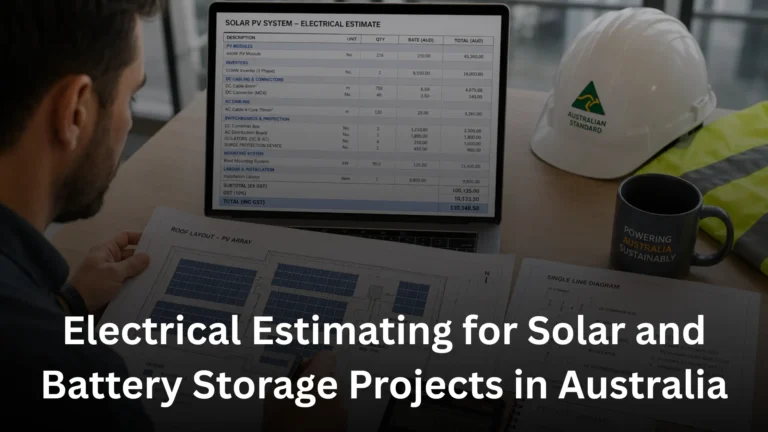
Why accurate estimating matters for renewable energy projects
Solar and battery storage projects involve more than simply counting solar panels. Commercial installations often require coordination between electrical, structural and mechanical documentation, together with careful assessment of equipment layouts, switchboard upgrades and cable routing.
An incomplete estimate can lead to:
- Missed quantities
- Inaccurate tender pricing
- Unexpected material requirements
- Labour planning challenges
- Project variations
- Delays during procurement and installation
Using a structured estimating process helps contractors understand the project scope before submitting a tender.
What is included in solar project electrical estimating?
A professional solar project electrical estimating process reviews all relevant project documentation to identify the electrical components required for installation.
Depending on the project scope, this may include:
Electrical Scope | Typical Items Reviewed |
PV System | Solar panels, mounting interfaces, strings, DC components |
Inverters | String inverters, central inverters, associated equipment |
Battery Storage | Battery units, battery cabinets, control equipment, monitoring interfaces |
Cabling | DC cabling, AC cabling, communication cabling, earthing conductors |
Switchboards | Main switchboards, distribution boards, upgrades and connections |
Containment | Cable tray, conduit, trunking and supports |
Protection Equipment | Isolators, breakers, protection devices and associated accessories |
Installation Requirements | Equipment connections, terminations and electrical accessories |
The exact scope will vary depending on the project documentation and contractual responsibilities.
Key components that should be included in a solar electrical takeoff
An accurate solar electrical takeoff forms the foundation of every estimate.
1. Solar PV equipment
Review drawings and schedules for:
- PV module quantities
- Array layouts
- Mounting locations
- String arrangements
- Roof or ground-mounted installation areas
- Equipment schedules
Cross-reference architectural and structural drawings where installation interfaces affect the electrical scope.
2. Inverters
Identify:
- Inverter quantities
- Mounting locations
- Capacity references
- AC and DC connections
- Communication requirements
- Isolation equipment
Large commercial systems may contain multiple inverter locations requiring separate cable runs and containment.
3. Battery storage systems
For battery storage estimating, review:
- Battery units
- Battery enclosures
- Battery management interfaces
- Power conversion equipment
- Monitoring systems
- Isolation equipment
- Connection requirements
Battery installations often involve additional electrical infrastructure beyond the battery units themselves.
4. Switchboards and distribution equipment
Commercial renewable energy projects frequently involve modifications or additions to existing electrical infrastructure.
Review:
- Main switchboards
- Distribution boards
- Metering arrangements
- Protection devices
- Main connections
- Upgrade requirements where documented
Switchboard documentation should always be checked alongside single-line diagrams.
5. Cabling
Cable quantities should consider:
- DC cable runs
- AC cable runs
- Communication cabling
- Earthing conductors
- Cable supports
- Route lengths
- Cable segregation where specified
Rather than relying solely on panel counts, estimators should review routing information throughout the drawing package.
6. Cable containment
Containment may include:
- Cable tray
- Cable ladder
- Conduit
- Trunking
- Flexible conduit
- Supports
- Junction boxes
These items are often distributed across several drawing sets and should be reviewed systematically.
Labour considerations for renewable energy estimating
Material quantities represent only one part of an estimate. Labour planning is equally important when preparing tenders for commercial solar and battery projects.
Labour requirements may be influenced by:
- Roof accessibility
- Building height
- Equipment locations
- Existing infrastructure
- Installation sequencing
- Working space
- Cable routing complexity
- Site logistics
- Project staging
Estimators should base labour assumptions on the available project documentation and clearly identify any assumptions where information is incomplete.
Project allowances to review
Not every project includes identical requirements. During electrical estimating for renewable energy, contractors should review whether the tender requires allowances for:
- Temporary works
- Site establishment
- Equipment commissioning support
- Testing requirements
- Temporary power
- Access equipment
- Traffic management where applicable
- Delivery logistics
- Waste management
- Documentation requirements
These items should only be included where supported by the project documentation or tender requirements.
How to estimate a commercial solar and battery project
The most reliable estimates follow a structured workflow.
Step 1: Review project documentation
Collect:
- Electrical drawings
- Architectural drawings
- Single-line diagrams
- Equipment schedules
- Specifications
- Tender documentation
- Drawing revisions
Ensure the latest revisions are being used.
Step 2: Confirm project scope
Identify:
- Included systems
- Excluded systems
- Client-supplied equipment
- Contractor responsibilities
- Assumptions requiring clarification
A clear understanding of scope reduces the risk of duplicate or omitted quantities.
Step 3: Complete the electrical quantity takeoff
Measure and quantify:
- PV equipment
- Inverters
- Batteries
- Switchboards
- Cabling
- Containment
- Electrical accessories
- Equipment connections
Maintain consistent measurement methods throughout the project.
Step 4: Review labour requirements
Assess installation complexity based on project documentation and site conditions where information is available.
Step 5: Check the estimate
Before completing the tender:
- Compare quantities against schedules
- Check drawing revisions
- Review assumptions
- Verify exclusions
- Confirm documentation consistency
For contractors wanting a broader overview of estimating workflows, this guide explains the step-by-step process of preparing an electrical estimate.
Common estimating challenges on renewable energy projects
Renewable energy projects often involve documentation from multiple disciplines, making coordination an important part of the estimating process.
Common challenges include:
- Multiple drawing revisions
- Incomplete documentation
- Equipment substitutions
- Changing project scope
- Coordination between electrical and structural drawings
- Complex cable routing
- Existing infrastructure interfaces
A systematic review process can help identify these issues before tender submission.
When should contractors consider professional estimating support?
Commercial solar and battery projects can generate substantial estimating workloads, particularly when tender deadlines are short or multiple projects are being priced simultaneously.
Professional estimating support may be beneficial when:
- Internal estimating resources are at capacity
- Complex renewable energy projects require detailed quantity takeoffs
- Multiple tenders are due within a short period
- Contractors require consistent estimating documentation
- Commercial or industrial projects involve extensive drawing packages
If your business is pricing renewable energy projects alongside other commercial work, consider exploring professional electrical estimating services to supplement your estimating capacity.
Providing the latest drawings, specifications and tender requirements allows an estimating team to review the project scope more efficiently.
Renewable Energy Electrical Estimating Checklist
Before finalising your estimate, confirm that you have:
- Reviewed the latest drawing revisions
- Confirmed the project scope
- Counted PV equipment
- Identified inverter quantities
- Measured battery storage components
- Reviewed switchboards
- Measured cable quantities
- Calculated containment requirements
- Reviewed protection equipment
- Considered labour requirements
- Identified project allowances
- Recorded assumptions and exclusions
- Cross-checked schedules and drawings
- Completed a final estimate review
Using a structured checklist can improve consistency and make the estimating process easier to review before tender submission.
Supporting successful renewable energy tenders
Solar and battery storage developments continue to expand across Australia’s commercial and industrial sectors. Successful tenders rely on more than competitive pricing—they depend on accurate quantity takeoffs, a clear understanding of project scope and a structured estimating process.
Whether you are pricing a rooftop PV installation, battery energy storage project or larger commercial renewable energy development, a thorough estimating approach helps reduce uncertainty during tender preparation.
If you have an upcoming renewable energy project and require estimating support, discuss the drawings, project scope and tender requirements with an experienced estimating team before your submission deadline.
For project-specific assistance, contact Estimating Solutions Group to discuss your commercial or industrial estimating requirements.
Frequently Asked Questions
What is solar electrical estimating?
Solar electrical estimating is the process of calculating the electrical quantities, labour requirements and project scope needed for solar PV and battery storage installations based on drawings, specifications and tender documentation.
What is included in solar project electrical estimating?
It may include electrical quantity takeoffs for PV systems, inverters, battery storage, switchboards, cabling, containment, protection equipment, accessories, labour requirements and project-specific allowances.
How do you estimate a commercial solar project?
Review the latest project documentation, confirm the project scope, complete a detailed quantity takeoff, assess labour requirements, review assumptions and perform a final quality check before preparing the tender.
What is a solar electrical takeoff?
A solar electrical takeoff identifies and measures the electrical components required for a renewable energy installation. These quantities are then used as the basis for preparing an electrical estimate.
Why is battery storage estimating important?
A solar electrical takeoff identifies and measures the electrical components required for a renewable energy installation. These quantities are then used as the basis for preparing an electrical estimate.